
Teaching through Projects: Creating Effective Learning Environments
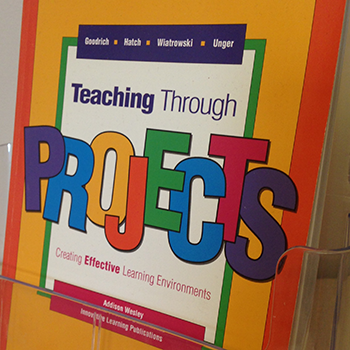
The ideas in Teaching through Projects can be used in grades 3-6 for both classroom and out-of-school programs. Projects can make learning meaningful to students lives in ways that subject-by-subject teaching cannot and can motivate students to take charge of their own learning. Teaching through Projects helps teachers become coaches and mentors by setting up a model for integrated learning. You'll find successful projects, teaching strategies, and project design to increase students interest and motivation while meeting curriculum demands. The approach will help your students develop literacy and thinking skills by building on a wide variety of activities and interests. 1996, ISBN: 978-0201495072
Mather Afterschool Program: A Project-Centered Approach to Literacy in Education
From 1990 to 1994, researchers from Project Zero collaborated with teachers in the development of a project-based afterschool program that built students' literacy and thinking skills. The program involved students from the third, fourth, and fifth grades at the Mather School, a public elementary in Dorchester, Massachusetts.
The program was designed to serve multiple purposes: 1) The project-based curriculum was intended to help students who were having difficulty in school become self-directed thinkers and learners, 2) The afterschool setting offered a supportive context within which teachers could try out innovative teaching strategies and curriculum, 3) Finally, the program served as a stimulus and model for creating effective learning environments both inside and outside of school. Those projects and instructional practices found to be most effective could be incorporated into the regular school day, or adopted by other teachers, schools, or afterschool programs.
The projects were based on goals that were meaningful to students and teachers and provided natural opportunities for the use of literacy and thinking skills. They also incorporated recent advances in approaches to problem solving, peer collaboration, assessment, and teaching through modeling and coaching rather than direct instruction. For example, in one project the students planned and then took a field trip of their own choice. The project involved creating a budget, making a proposal to the teacher, getting feedback from classmates, and reflecting on the success and value of the trip.
In the "Better World Project," the students addressed social and environmental problems like homelessness, violence, and pollution. They explored the causes of these problems, brainstormed a number of different solutions, and then carried out those that were most promising. During this project, students organized a clothing drive for a homeless shelter, wrote letters to government officials, and changed wasteful practices at their school. Other projects included publishing a newspaper, writing and producing scripts for public service announcements, leading a recycling drive, planning an exhibition of afterschool work, inventing games, designing jewelry, and preparing healthy snacks. The book Teaching Through Projects: Creating Effective Learning Environments provides examples of projects developed in the afterschool program.
This project was made possible thanks to the generous support of Charitable Trusts, the John D. and Catherine T. MacArthur Foundation, the Spencer Foundation, and New England Telephone.