Think, Feel, Care (For Younger Children)
Exploring complexity.
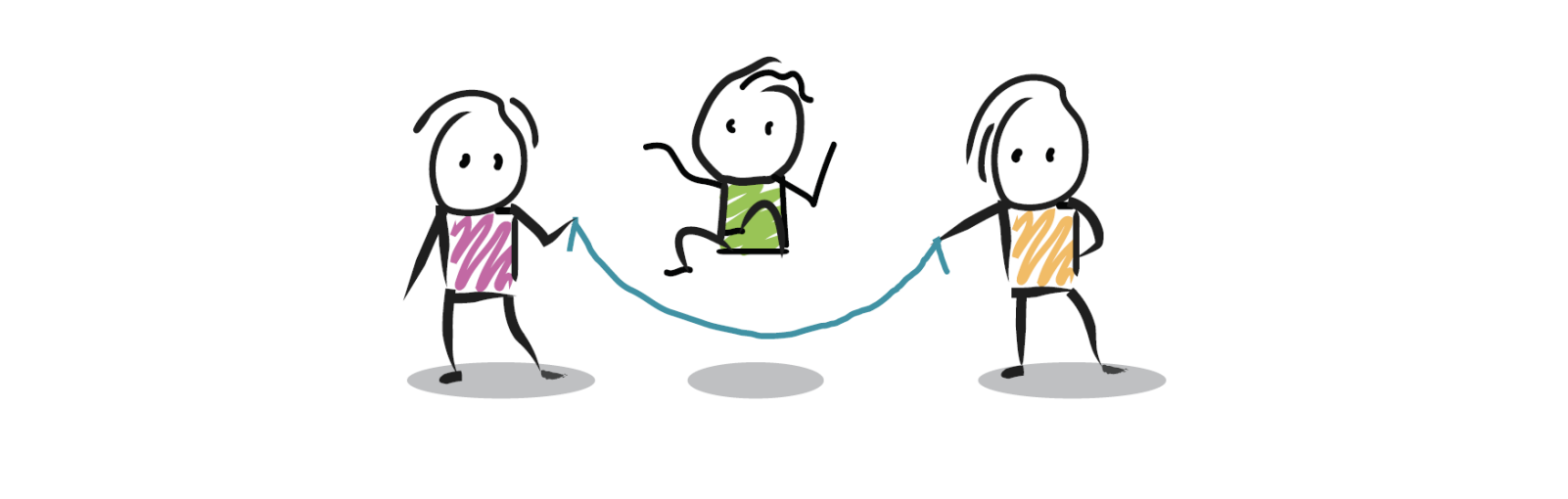
Choose a system that involves several people. Select one person from the system and ask:
Think: What does this person do in the system? How do you know?
Feel: If you were this person, how would you feel? Why would you feel that way?
Care: If you were this person, what would you care about? What would be important to you?
To help children think about different perspectives, choose a different person from the system and ask the questions again.
PURPOSE
What kind of thinking does this routine encourage?
This routine encourages students to consider the diverse perspectives that different people within a particular system may have based on their role in the system. This routine fosters perspective taking and can help children generate new questions and/or ideas about the system, how it works, and how it might be improved.
APPLICATION
When and where can I use it?
You can use this thinking routine to explore the perspectives of anyone within a system. You may choose to introduce the entire routine at once, or you may choose to break it down into parts over multiple occasions. Though you can use this thinking routine on its own, we suggest you use it in combination with other Agency by Design thinking routines that encourage students to look closely and carefully explore the parts and purposes of the system they are working with.
If you are using this thinking routine with young learners, consider having them think about a system they have direct experience with. This way, all children can apply and build upon their prior knowledge in meaningful ways. We suggest you start with systems in your classroom or community that students use regularly.
You may also use this routine to explore the interactions presented in a fictional story. Children can explore the different perspectives of the characters based on their different roles in the story.
Consider having children engage in this routine through role play, with each student portraying a different person in the system. Once students portray someone one way, have them try to portray the same person in a different way. This can help children understand that, even within particular-groups of people, there is no one set perspective, but rather an array of possible perspectives.
Students will likely draw on their assumptions about the various people in their system. Consider discussing where these assumptions come from. You can encourage students to challenge their assumptions by asking them what they really know about someone else’s perspective, and what they could do in order to find out more about someone else’s perspective. For example, they could conduct interviews with someone in that role, seek out more information using the internet or books, or even find ways to experience that role themselves.
Encourage students to notice that not everyone in a system feels the same way or cares about the same things. Have them talk about this. Why might different people have different perspectives? What problems might arise because of this? What might be some benefits of this?
FACILITATION
This activity is recommended for the following learner age ranges:
- Preschool
- 15-30 minutes
- Heavily facilitated by peer/teacher/caregiver
- Elementary, Middle, and High School
- 15-30 minutes
- Lightly facilitated by peer/teacher/caregiver
Origins
This thinking routine emerged from the Agency by Design project and adapted from the "Think, Feel, Care" routine. Take a look!
Copyright
© 2019 President and Fellows of Harvard College and Project Zero. This work is licensed under a Creative Commons Attribution-NonCommercial-NoDerivatives 4.0 International License (CC BY-NC-ND). This license allows users to share this work with others, but it cannot be used commercially. To reference this work, please use the following: The “Think, Feel, Care (For Younger Children)” thinking routine was developed by Project Zero, a research center at the Harvard Graduate School of Education