Using Thinking Routines Purposefully
Learn to use thinking routines as more than activities, but as powerful resources that support rich patterns of thinking.
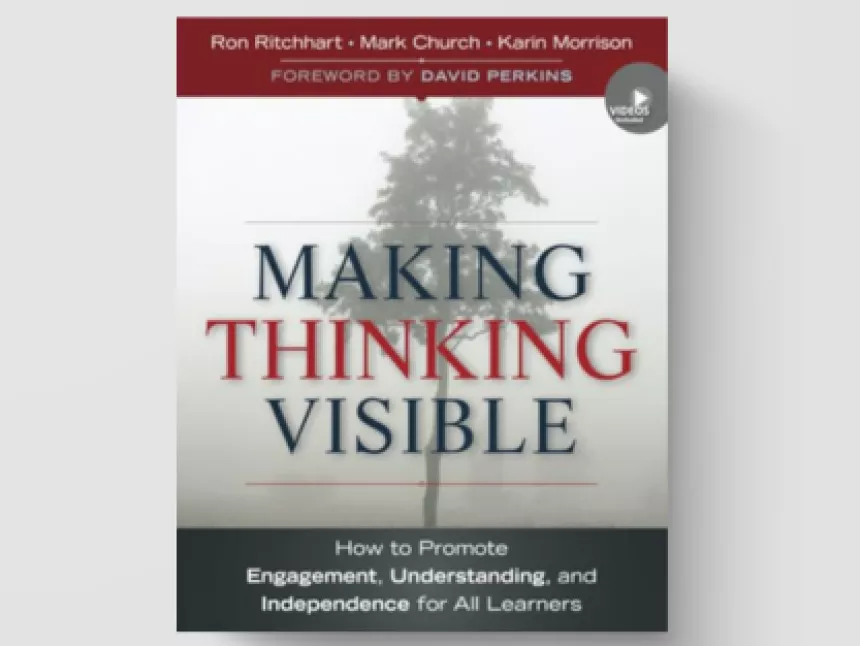
Have you ever used a thinking routine in your teaching or facilitating? It may have been developed as part of the Visible Thinking research as a tool to deepen content learning and cultivate students' thinking skills and dispositions. While thinking routines can be used in all subjects, grade levels, and in a range of educational settings, they are often used as activities rather than as powerful resources that support rich patterns of thinking.
Overview
In this course, you'll explore the power of thinking routines and the documentation of student thinking. You'll try out a selection of thinking routines and learn how to implement them purposefully.
- Examine how thinking is typically framed in educational settings, identifying some of the practical challenges that arise and considering how we can reframe these conversations to foster greater learning and growth—both for our students and for ourselves
- Engage with thinking routines as tools and structures that support rich patterns of thinking
- Try out practices of facilitating thinking routines with peers and with your own learners
- Bring your learning to life by looking closely at artifacts of student thinking and reflecting on your journey of making thinking visible and valued in your own work with learners
Who Should Participate
- Teachers, teacher leaders, and school administrators and leaders
- Museum educators and educators working in informal learning environments
- Facilitators of pre-K to adult learning
Time Commitment
Anticipate a workload of 2.5-3 hours per week for four weeks. The course provides 12 total hours of professional learning. During each session:
- Team Meeting: This 1-hour live, synchronous team meeting happens every week, scheduled and facilitated by the team members with PZ-designed agenda.
- Reading, Practice, and Assignments: Plan remaining time for reading and individual reflections/assignments. If you are not currently working in a school or educational organization, you will need a classroom context or a consistent group of students with whom you can try out/practice the ideas you are learning throughout the course.
Schedule
Each weekly session opens on a Monday and ends on a Sunday. Participants decide when to work on the course material and when to schedule their team meetings within each session.
- Session 1: October 19-October 25, 2026
- Session 2: October 26-November 1, 2026
- Session 3: November 2-November 8, 2026
- Session 4: November 9-November 15, 2026
Tuition, Discounts, and Financial Aid
For mini courses (four sessions, four weeks), the tuition is:
- $355 for educators joining as part of a team (three to six members from the same organization)
- $385 for educators joining as part of a team of two (from the same organization) who will be placed on a virtual team with other teams of two (as attendance allows)
- $399 for educators joining as individuals to be placed on a virtual team
Financial aid is limited and awarded on a first-come, first-served basis, and typically covers 50-70% of a course's tuition for eligible educators. Applications must be submitted and accepted prior to registration. Review our financial aid criteria.
Questions?
Visit the FAQs page for more information on PZ online courses, or email pzlearn@gse.harvard.edu.

Contact Us
If you have specific questions about any of our professional development opportunities, please email us at pzlearn@gse.harvard.edu.